
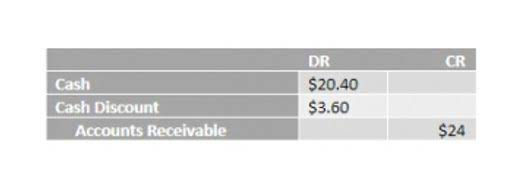
Hence, we have reconciled the balances and can use this balance in the preparation of financial statements. A control account is a general ledger account created to record the bulk transaction of the same nature and then summarize the balance. The main account needs to be shown in the financials (the parties have maintained, i.e., an individual account for the same nature of transactions, and the summarized balance is shown).

The Trial Balance & Correction of Errors
With each subsidiary ledger scrutinized against the corresponding control account, fraud becomes more difficult to execute and easier bookkeeping to spot. All individual balances have been transferred to the debtor’s control account. Similarly to trade receivables, all trade payable balances are transferred to creditor accounts.
- Control accounts are usually the fiduciary responsibility of a company’s financial manager.
- Having well-kept, accurate control accounts not only assists in meeting these requirements but also provides a safeguard during audit inspections.
- Using a good accounting software package is the easiest way to view and amend control accounts.
- Please watch the video below to gain a much better understanding of control accounts.
- They allow one to see the totals, without getting into too much details from individual accounts.
- This way the ledger only has one accounts receivable account instead of hundreds.
Uses of Control Accounts
- During the Mauryan Empire in India, Chanakya wrote a manuscript similar to a financial management book.
- It serves the purpose of the reconciliation that increases our confidence in the ending balance of accounts receivables.
- For example, a sales ledger & debtor ledger control account summarizes the transactions entered with the individual accounts in the ledger.
- The purpose of a subsidiary account is to keep track of accounts receivable and payable information at a very detailed level.
- When a purchase or sale is on credit, you need to use a control account.
- Plus, when it comes to financial reports, the summary balances displayed in control accounts are generally considered sufficient information.
The balance in this account increases with every purchase made on credit and decreases when payments are made. Control accounts’ role in promoting financial transparency in an organization cannot be understated. This type of visibility encourages openness and reduces the chance what is a control account in accounting of misunderstandings or miscommunications about the company’s financial health. The people who would monitor these accounts are called control account managers. You don’t want the person in control of your general accounts in control of the control accounts, as well.
Formats of Control Accounts under Non-Integrated Accounting:
Following this procedure helps the management create a control on the ledger posting, which safeguards against the possible chances of misrepresentation and fraud. (i) Control accounts provide a summary of transactions recorded in various subsidiary ledger. With accounting software, the process of creating control accounts and subledgers can be simplified.
- Given their capacity for streamlining financial processes and mitigating risks, controlling accounts can be crucial in advancing a company towards its sustainability goals.
- Double Entry Bookkeeping is here to provide you with free online information to help you learn and understand bookkeeping and introductory accounting.
- The sale will be recorded as a credit entry (as normal) but what about the corresponding debit?
- Similarly, the Accounts Payable shows the total amount owed to suppliers, which is a liability.
- Opposite to the Accounts Receivable, Accounts Payable represents the amount a company owes for purchasing goods or services on credit from its suppliers or vendors.
- These two columns in the control account record the value of the transaction.
- Using them effectively gives you better control over your finances, and you can make informed decisions to drive your business forward.

At its core, the control account structure consists of various columns that capture specific information. Inventory Control account represents the value of goods a business currently owns that are expected to be sold in the future. This control account plays a crucial role in tracking and managing the company’s stock levels. An increase in this account reflects an acquisition of inventory, while a decrease indicates that inventory has been sold or used. Opposite to the Accounts Receivable, Accounts Payable represents the amount a company owes for purchasing goods or services on credit from its suppliers or vendors. The role of this control account is to monitor all the pending payments that a company must make.

Control accounting helps create streamlined financial reports, and can provide an additional verification step to ensure accuracy. For example, an accounts receivable control account must have a subtotal which matches the customer balances in the sub ledger. If there is a discrepancy with these totals, then there is an error somewhere in the books which must be identified and corrected. A company can have hundreds or thousands of customers with current accounts receivable balances.
Experienced in using Excel spreadsheets for her bookkeeping needs and created a collection of user-friendly templates designed specifically for small businesses. These two columns in the control account record the value of the transaction. If the account is being debited, the amount is entered https://www.bookstime.com/ into the debit column. Among the variety of control accounts available, some of the most commonly utilized include Accounts Receivable, Accounts Payable, and Inventory Control.

